How to Plan an Optimised Truck Route: Step-by-Step Guide
Truck route planning is more than connecting addresses on a map. The expensive mistake we see in dispatcher tours is rarely the road chosen between two stops. It is the stop sequence and the time windows: a tour that looks fine on the map runs into a two-hour wait at stop three and tips the driver into overtime. This guide shows how to plan an optimised truck route in the Planner Module step by step, so tours respect time windows, cut mileage, lower toll and fuel costs, and stay within real driver and vehicle limits.
Table of Contents
- What Is an Optimised Truck Route?
- How to Use the Map and Stop Tools for Smart Planning
- Which Tour Type Should You Choose: Single-Day or Multi-Day?
- How to Optimise Stop Sequence and Plan a Round Trip
- How Loading Unit Details Improve Optimisation
- How to Set Time Windows and Avoid Overtime
- How to Fix Time Window Conflicts Automatically
- How Total Tour Time Is Calculated
- How to Share and Execute Your Optimised Tour
1. What Is an Optimised Truck Route?
An optimised truck route saves fuel, avoids delays, and fits within operational limits. It accounts for truck-specific restrictions (bridge heights, weight limits, environmental zones), per-country toll costs, and the driving and rest-time rules the tour has to obey, not just the distance between points.
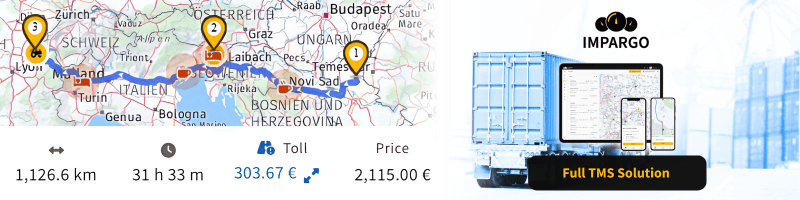
With the IMPARGO truck route planner, you build routes that factor in time windows, loading activities, stop duration, and rest breaks to create a realistic, profitable tour.
2. How to Use the Map and Stop Tools for Smart Planning
Start your tour planning inside the Planner Module. You can:
- Manually enter stops via address fields
- Click directly on the map to add locations
- Import stop lists using Excel or CSV files

Enhance your map view with live traffic, truck restrictions, environmental zones, and incidents. Learn more about map layers ›
3. Which Tour Type Should You Choose: Single-Day or Multi-Day?
Click the clock icon in the Planner Module to enable time-based routing and select a tour type:
- Single-Day: All stops must be completed within one calendar day
- Multi-Day: Stops are automatically deferred to the next valid time window if necessary
4. How to Optimise Stop Sequence and Plan a Round Trip

Click the "Optimise" button under the address fields to activate two tools:
- Sequence Optimisation: Sort stops to minimise driving time, while optionally fixing the first or last stop
- Round Trip Optimisation: Return to the starting location automatically, ideal for depot-based tours

5. How Loading Unit Details Improve Optimisation
Click the (+) icon next to each stop to define what is being loaded or unloaded. You can specify:
- Unit type (e.g. pallet, container)
- Dimensions, weight, stackability
- Quantity and loading metres
6. How to Set Time Windows and Avoid Overtime

You can add up to two delivery or pickup windows per stop. These time windows keep your tour realistic and aligned with customer expectations, and they are where most tours quietly lose money.
7. How to Fix Time Window Conflicts Automatically

If a stop cannot be reached within its time window, it is marked in red. You can:
- Reorder stops
- Extend the stop's time window
- Switch from Single-Day to Multi-Day mode for automatic deferral

8. How Total Tour Time Is Calculated
IMPARGO calculates the full route time based on:
- Driving time between stops
- Stop duration (loading, waiting, paperwork)
- (Optional) EU truck driver rest breaks
- Buffer time per tour (manually added)

Learn how rest periods are included ›
9. How to Share and Execute Your Optimised Tour
After building your optimised tour, choose from these sharing options:
- Send via DriverApp: Share live instructions and truck navigation with the driver
- Export as PDF: Generate a professional tour summary
- Create Tracking Link: Share progress with customers
How to send planned routes to drivers ›
Plan Your First Optimised Tour Today
Manual tour planning eats dispatcher time and hides its costs in overtime, empty kilometres, and missed delivery windows. The Planner Module builds optimised, cost-transparent, compliant tours in a few clicks, then hands them straight to the driver, so your team spends the day on planning and customer service instead of re-sequencing stops by hand. It fits carriers running 5 to 30 trucks who plan tours daily and want the toll, distance, and time cost of each route visible before the truck rolls.
Related reading: 7 tips for truck route planning in logistics and our truck tour planning and optimisation software.