Transport Management Software for Small Business
Contents
- What Is Transport Management Software?
- Why Small Trucking Companies Need a TMS
- Key Features of a TMS
- How a TMS Reduces Planning Time and Empty Kilometers
- When to Switch from Spreadsheets to Software
- Final Thoughts for Small Carriers
What Is Transport Management Software?
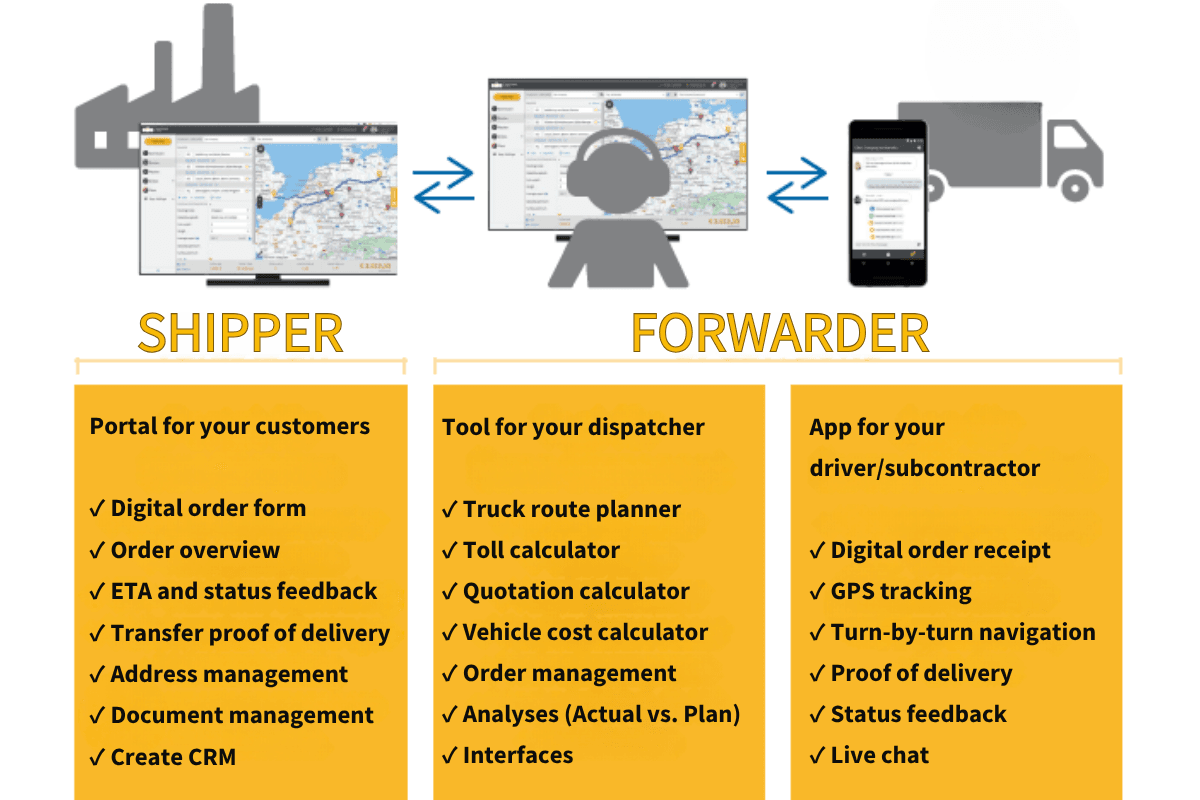
The European trucking industry is under immense pressure. Margins are tight, and costs are rising. To stay profitable, small transport companies must digitize. Transport management software acts as the central nervous system for your business, replacing the chaos of Excel and phone calls with control.
Dispatchers often struggle with manual calculations and disconnected tools. A dedicated system solves this by consolidating data—giving you instant visibility into vehicle location, costs, and order status.
Why Small Trucking Companies Need a TMS
For small freight forwarders or one-person businesses, every kilometer counts. Without the right tools, you are likely facing:
- Unpaid work: Spending hours manually calculating toll costs (Maut) for quotes.
- Communication chaos: Chasing drivers via WhatsApp for status updates or PODs.
- Data silos: Re-typing order details from email to Excel to invoice.
- Blind spots: Quoting prices without knowing your true cost per kilometer.
Bottom line: Digital tools don't just "save time"—they stop you from losing money on underpriced tours.
Key Features of a TMS (Route Planning, Dispatch, Tracking, Billing)
No system can do it all—but it should be the hub of your operations. A robust transport management system software should connect easily with accounting tools, telematics, and your preferred freight exchanges.
Key modules you should look for include:
- Route planning: Calculate profitable routes that account for truck restrictions and specific toll costs across Europe instantly.
- Dispatch planning: Drag-and-drop orders to drivers and send details directly to their smartphone app.
- Tracking: Provide customers with live order status updates via tracking links so they stop calling you.
- Invoicing: Convert a delivered order into an invoice in one click to improve your cash flow.
How a TMS Reduces Planning Time and Empty Kilometers
Manual coordination leads to dead miles. If a dispatcher is managing 10–25 trucks across Europe, keeping track of every vehicle's location via phone calls is impossible.
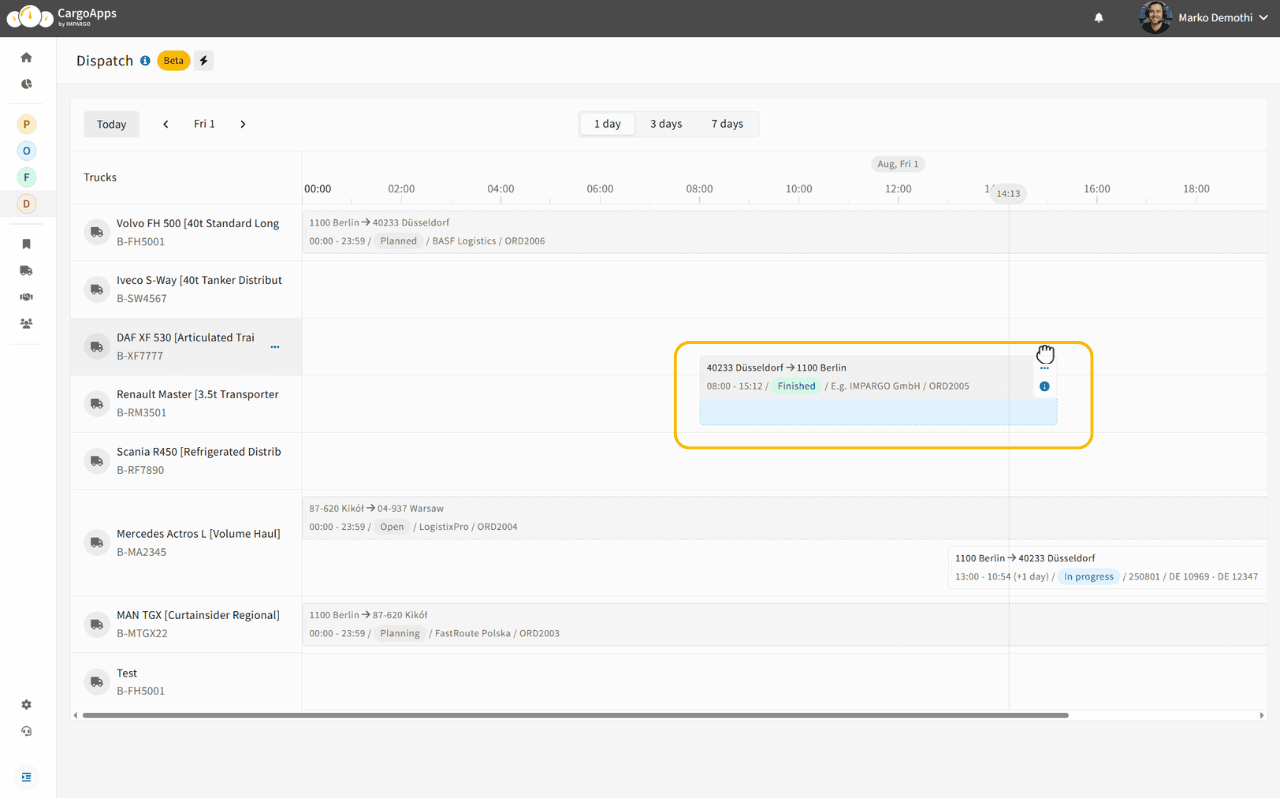
Software visualizes your fleet on a map. You can see exactly which truck is emptying near Paris or Berlin and assign a return load instantly. This visibility is the only way to effectively reduce empty kilometers and increase revenue per truck.
Your Benefits at a Glance:
- Save time: Stop manually checking toll tables and calling drivers.
- Reduce costs: accurate calculation of margins before you accept a load.
- Boost customer satisfaction: Professional tracking links make you look like a big player.
When to Switch from Spreadsheets to Software
Small trucking companies need a cost-effective logistics solution. If you are losing track of invoices or underpricing loads because your Excel sheet is outdated, it is time to switch.
Affordable and Cloud-Based
You don't need an IT department. Subscriptions are more flexible than large upfront investments. IMPARGO's pricing model is built for small fleets. As a cloud-based solution, you can work from the office, home, or on the road—no server required.
Easy to Use with Quick Setup
Dispatchers in small companies don't have time for week-long training sessions. You need an interface that is intuitive. With IMPARGO, there's no installation and no setup fee. Try IMPARGO for free today and plan your first route in minutes.
Final Thoughts for Small Carriers
IMPARGO's transport management software is built with and for dispatchers. It's fast, affordable, and scales with you—whether you run 1 truck or 100. It is specifically designed for small carriers looking to compete with the big logistics firms on efficiency, without the high price tag.