Truck Dispatch Software
Truck dispatch software improves planning speed, visibility, communication, and reliability. It reduces manual work, makes deliveries predictable, and allows fleets to scale without losing control of daily operations.
When fleet activity grows beyond what a spreadsheet can support, dispatch software becomes essential rather than optional.
Table of Contents
- What Is Truck Dispatch Software?
- Who Uses It?
- Why Companies Use Dispatch Software
- How Truck Dispatch Software Works
- Where This Software Helps Most
- Manual Planning vs. Software Planning
- How to Choose the Right Truck Dispatch Software
- IMPARGO TMP: Transport Management Platform
- Practical Use Case Scenarios
- FAQ
1. What Is Truck Dispatch Software?
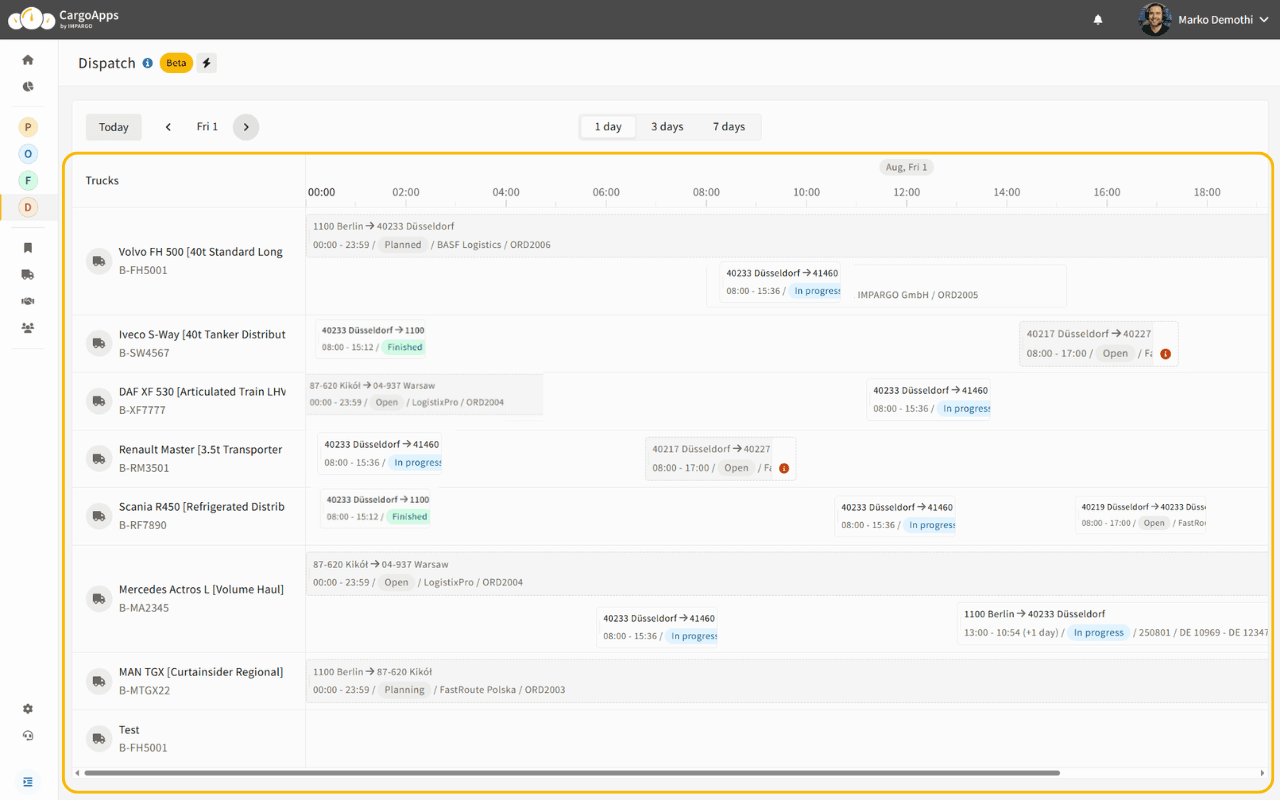
Truck dispatch software is a digital system used to plan transport orders, assign drivers, track trucks, and manage deliveries in real time. It replaces spreadsheets, phone calls, and messaging threads that slow down coordination and lead to avoidable mistakes.
A dispatcher managing 10 to 25 trucks manually can spend several hours every day confirming positions, responding to updates, and adjusting schedules. A dispatch system centralises information, reduces planning friction, and improves decision-making because every route, driver, and status update lives in one place.
2. Who Uses It?
Dispatch systems support several core logistics roles:
Dispatchers
Plan loads faster and reduce communication overhead.
Transport Planners
Optimise routing, prevent empty kilometres, and increase capacity usage.
Fleet Managers
Monitor locations, delays, and statuses without chasing updates.
Each role benefits when operations scale or when planning complexity becomes too high to manage manually.
3. Why Companies Use Dispatch Software
3.1 Higher efficiency
One central workspace replaces chats, phone calls, and spreadsheets.
3.2 Lower operating costs
Optimised routing reduces fuel use, idle time, and unproductive kilometres.
3.3 Better customer visibility and service
Live ETAs and transport status can be shared automatically.
Tracking example: live order status in the IMPARGO Orders module
Digital freight invoicing: IMPARGO Billing for freight invoices
The result is more predictable planning and smoother day-to-day execution.
4. How Truck Dispatch Software Works
A typical workflow:
- Create orders with pickup and delivery details
- Assign trucks and drivers
- Track location, ETA, and progress in real time
- Communicate using driver app workflows
- Finalise deliveries and documents digitally
Driver workflows: the IMPARGO DriverApp for truck drivers
This structure reduces errors caused by late updates or miscommunication.
5. Where This Software Helps Most
Dispatch software delivers the highest value when fleets:
- operate in multiple regions
- manage many loads simultaneously
- require reliable live ETA visibility
- rely on mobile workflows instead of paper slips
- need rapid response to schedule changes
The greater the complexity, the greater the efficiency gain.
6. Manual Planning vs. Software Planning
7. How to Choose the Right Truck Dispatch Software
Look for:
- A simple, intuitive interface
- GPS, telematics, CRM, and accounting integrations
- Real-time tracking and order visibility
- Mobile access for drivers
- Customisable workflows
- Scalable system architecture
- Clear and transparent pricing
The right tool should noticeably reduce operational effort.
8. IMPARGO TMP: Transport Management Platform
IMPARGO TMP allows carriers and freight forwarders to plan, assign, and track transport orders within one platform.
Core capabilities include:
- Route planning and dispatch
- Order execution and documentation
- Live tracking and ETA management
- Driver mobile communication
- Accounting and telematics integrations
- Cloud-based operation with no installation required

IMPARGO TMP supports real-time visibility and mobile-driven execution across European transport networks.
Learn more: IMPARGO dispatch planning software
9. Practical Use Case Scenarios
Example: Germany → Benelux operations
Manual calls replaced by instant load status and route visibility.
Example: Fleet growth from 12 to 35 trucks
Without software, communication scales linearly. With automation, workload does not.
Example: Last-minute order changes
Manual rerouting may take 20 to 40 minutes. Digital dispatching performs the update in seconds.
These cases illustrate where automation creates measurable efficiency.
10. Frequently Asked Questions
What does truck dispatch software do?
It centralises planning, driver assignment, tracking, and delivery management.
Who benefits most from using it?
Dispatchers, transport planners, and fleet managers managing multiple vehicles.
Why replace spreadsheets and phone-based coordination?
Manual workflows scale poorly and lead to delays and errors.
How does dispatch software reduce costs?
By cutting empty trips, fuel waste, and idle time.
How do drivers interact with the system?
Through a mobile app that receives job details and sends live progress updates.