7 Truck Route Planning Tips for SMEs in Road Freight
Small and mid-sized hauliers lose money in the same predictable places: a route that a car map calls fast but a truck cannot legally drive, a quote sent before the toll was counted, and an afternoon of phone calls chasing a delayed driver. These seven tips target those gaps, ordered roughly by impact. For the step-by-step version of building one optimised tour, see how to plan an optimised truck route.
Table of Contents
- Account for legal and road restrictions
- Get cost transparency before quoting
- Plan multi-stop and multi-day tours properly
- Use real-time tracking to react to delays
- Maximise fleet use and cut empty trips
- Replace Excel with a real planning tool
- Support drivers with digital navigation
1. Account for Legal and Road Restrictions
Not every road fits every truck. Manual planning often ignores height, weight, and hazardous-goods limits, night or city bans, and vehicle-type rules for articulated trucks or tankers.
Tip: build vehicle profiles in your planner with axle count, trailer type, ADR class, and dimensions, so the route respects them from the start.
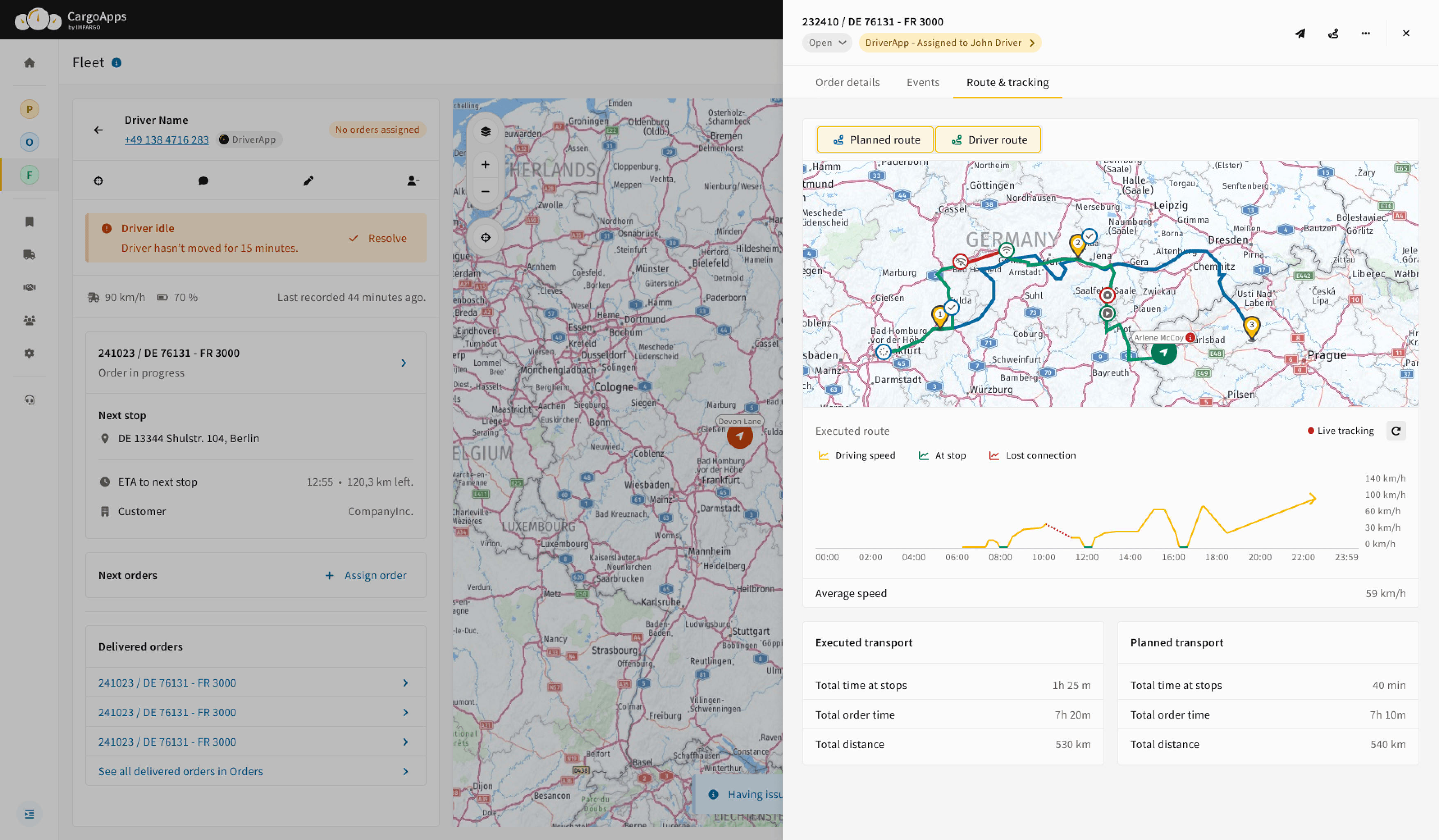
Use the IMPARGO truck route planner for safe, compliant routing.
2. Get Cost Transparency Before Quoting
Quoting without accurate costs leads to underpriced orders, unexpected toll or fuel bills, and no way to compare tour profitability.
Tip: simulate tolls by CO₂ class and weight, and include fuel, AdBlue, and driver cost before the quote goes out.
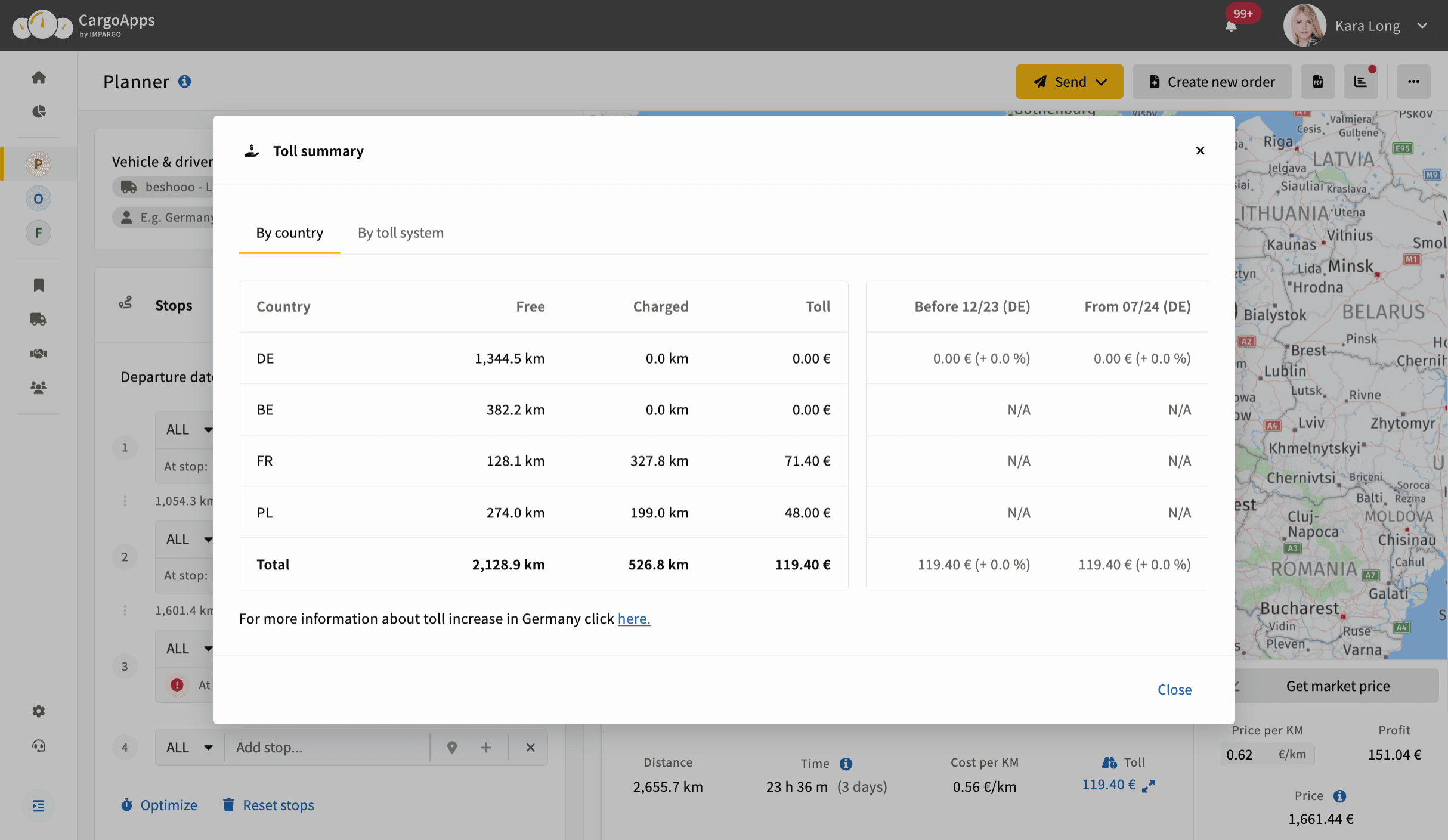
Use the toll calculator and the truck cost calculator together.
3. Plan Multi-Stop and Multi-Day Tours Properly
Every stop adds cost. Poor sequencing leads to wrong stop order, higher fuel use and driving time, and missed delivery windows.
Tip: include time windows, legal rest times (Regulation (EC) No 561/2006), and real-time traffic in the plan, not as an afterthought.
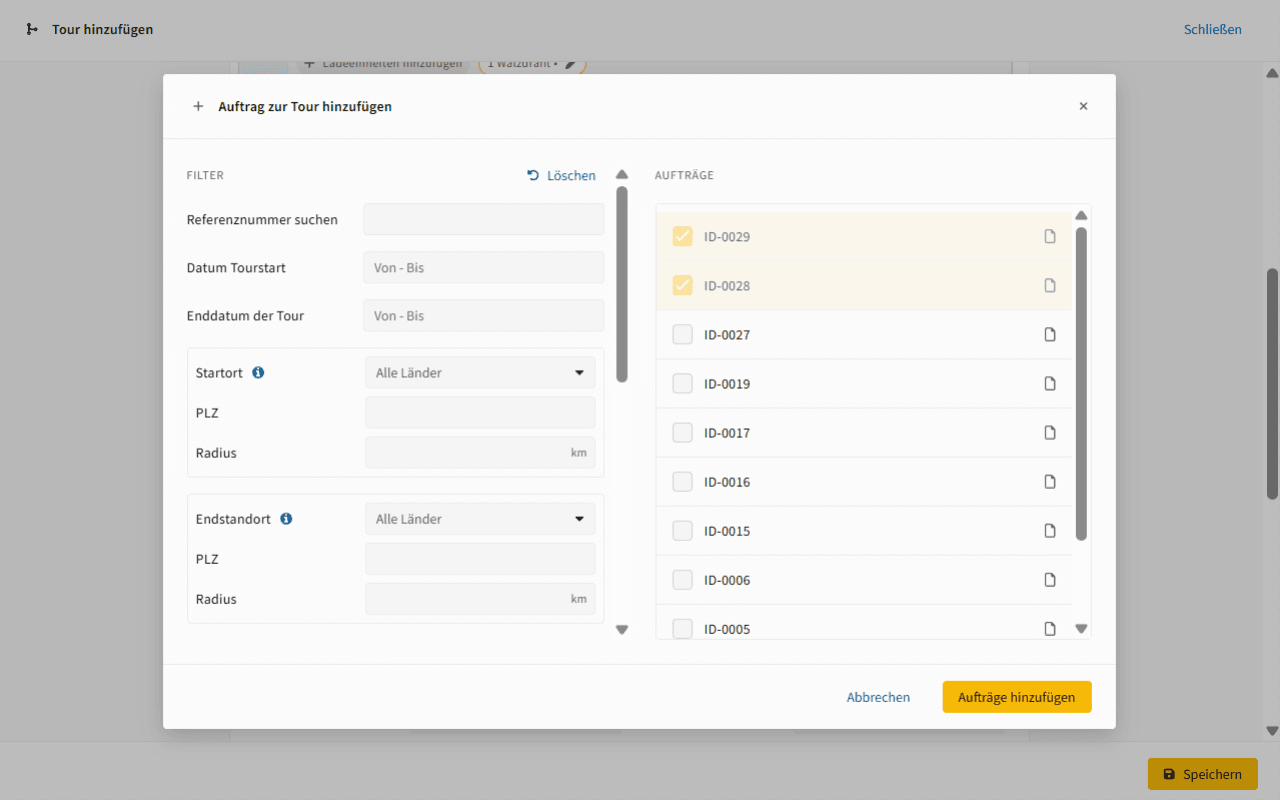
Use the IMPARGO order & dispatch software.
4. Use Real-Time Tracking to React to Delays
Delays happen. Without visibility, deliveries arrive late, detour costs rise, and SLAs slip.
Tip: use geofencing and client-friendly live tracking links so a delay is a message, not a surprise.
Track live with the IMPARGO DriverApp.
5. Maximise Fleet Use and Cut Empty Trips
Empty trips are lost margin. The usual causes are partially loaded vehicles, unused capacity, and a high cost per kilometre.
Tip: consolidate shipments, analyse load factors, and track empty kilometres weekly.
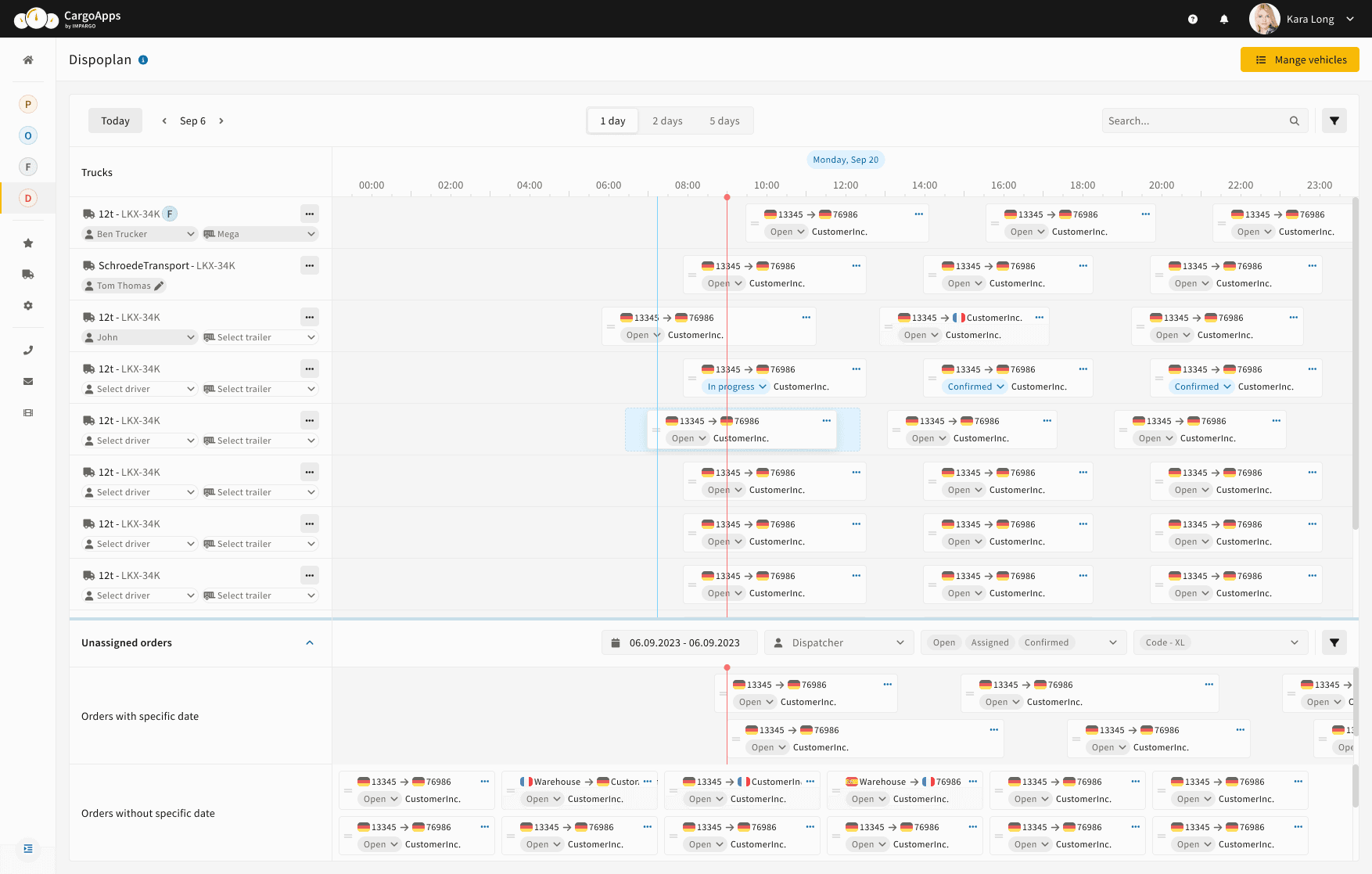
Plan utilisation with the IMPARGO dispatch planning software.
6. Replace Excel with a Real Planning Tool
Excel has no route optimisation, no integrated time or cost logic, and high manual effort.
Tip: move to a browser-based planner with PDF order import and reusable templates.
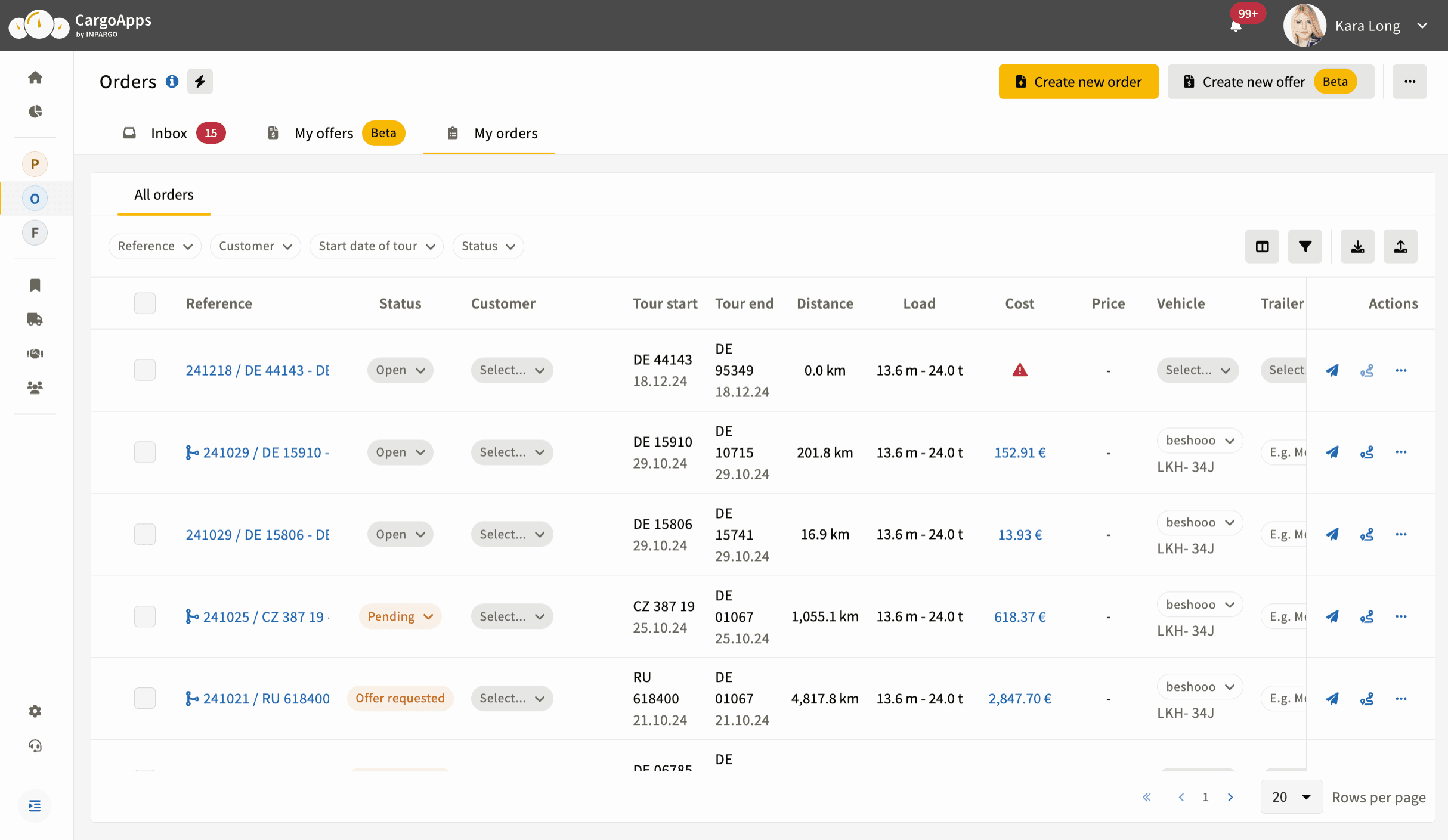
Upgrade to the IMPARGO TMS for FTL, LTL, Express, and ADR.
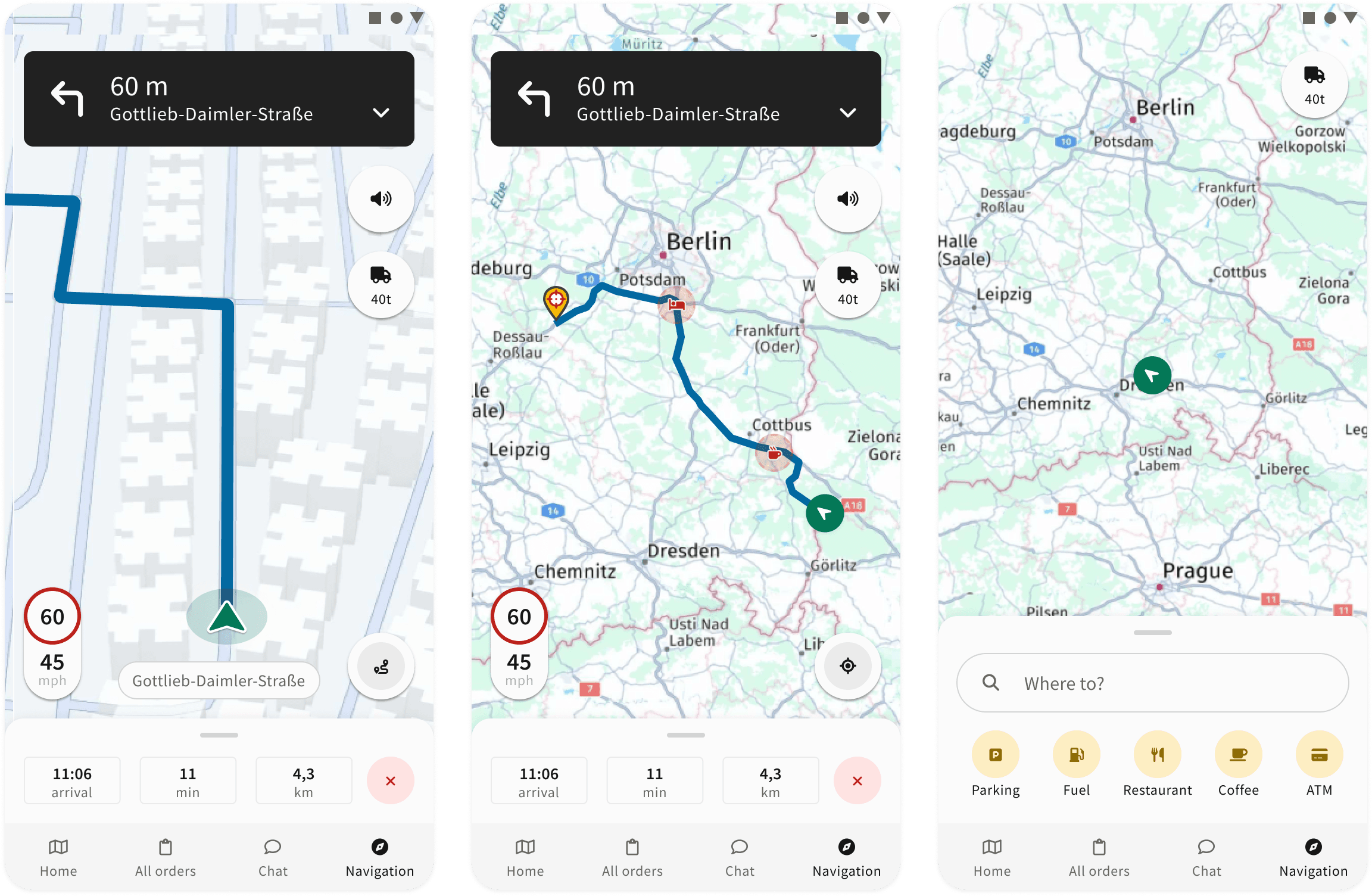
7. Support Drivers with Digital Navigation
Uninformed drivers cause errors: wrong stops, missed documents, and no easy way to report a problem.
Tip: give drivers an app with the stop order, document upload, ETAs, and proof-of-delivery photos.
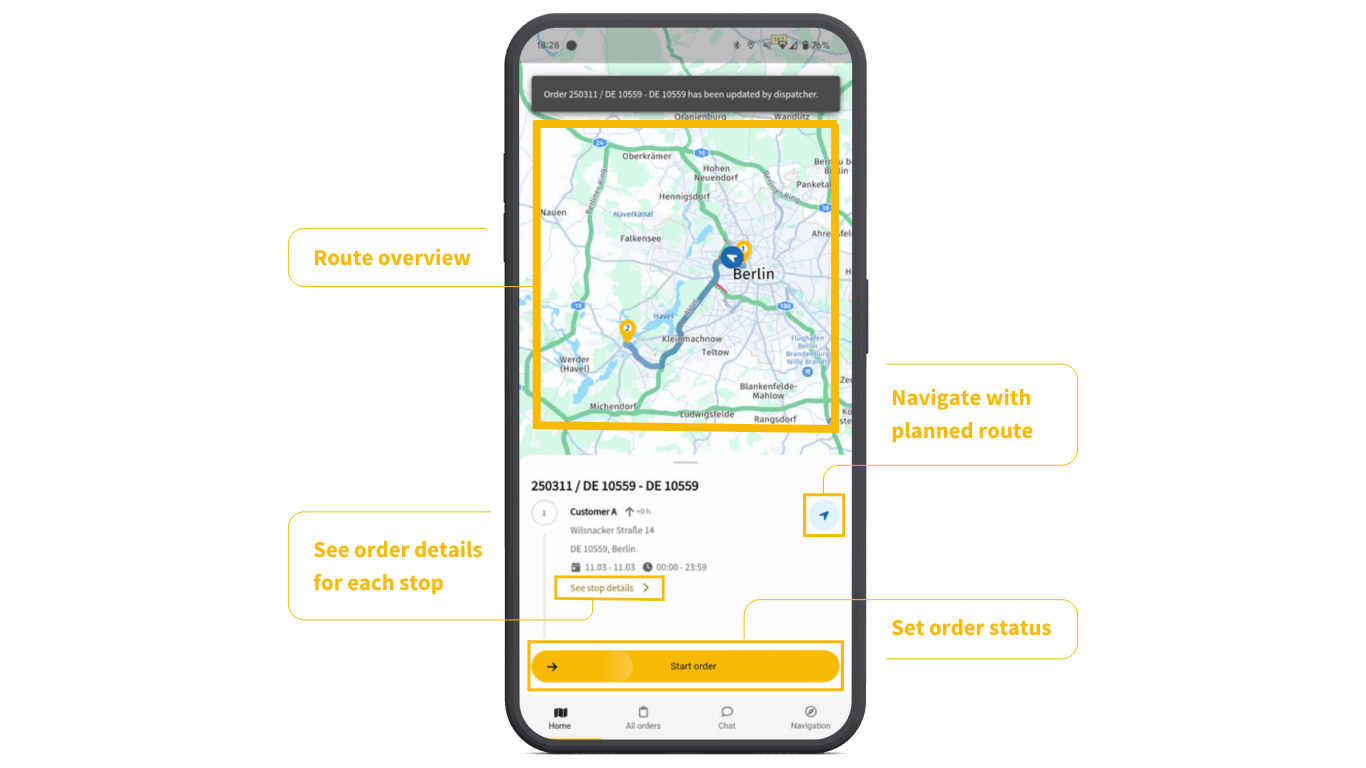
The IMPARGO DriverApp supports tracking and event capture with no extra hardware.
Turn These Tips Into a Planned Tour
People Also Ask
How do I plan efficient truck routes for EU logistics?
Use a truck-specific planner like the IMPARGO truck route planner to factor in legal, size, and traffic constraints instead of a car map.
What are the common truck routing mistakes?
Manual planning, ignoring toll and fuel costs, and having no real-time updates, which together cause missed deadlines and higher costs.
Which tool helps with multi-stop planning?
The IMPARGO order & dispatch software sequences stops, plans rest periods, and manages multi-day tours.
How can I track trucks without extra hardware?
The IMPARGO DriverApp provides real-time GPS tracking and event reporting from the driver's phone.