AI in Logistics: What a Transport Management System Automates
AI in logistics is easy to oversell. For a carrier running 5 to 30 trucks, the useful question is not "is it AI?" but "which repetitive task does it take off my dispatcher's desk?" The honest answer today: reading transport orders, planning cost-aware truck routes, and flagging what needs attention. This article explains what a modern transport management system (TMS) actually automates, where the time savings are real, and where a human dispatcher still decides.
What "AI in Logistics" Actually Means for a Trucking Company
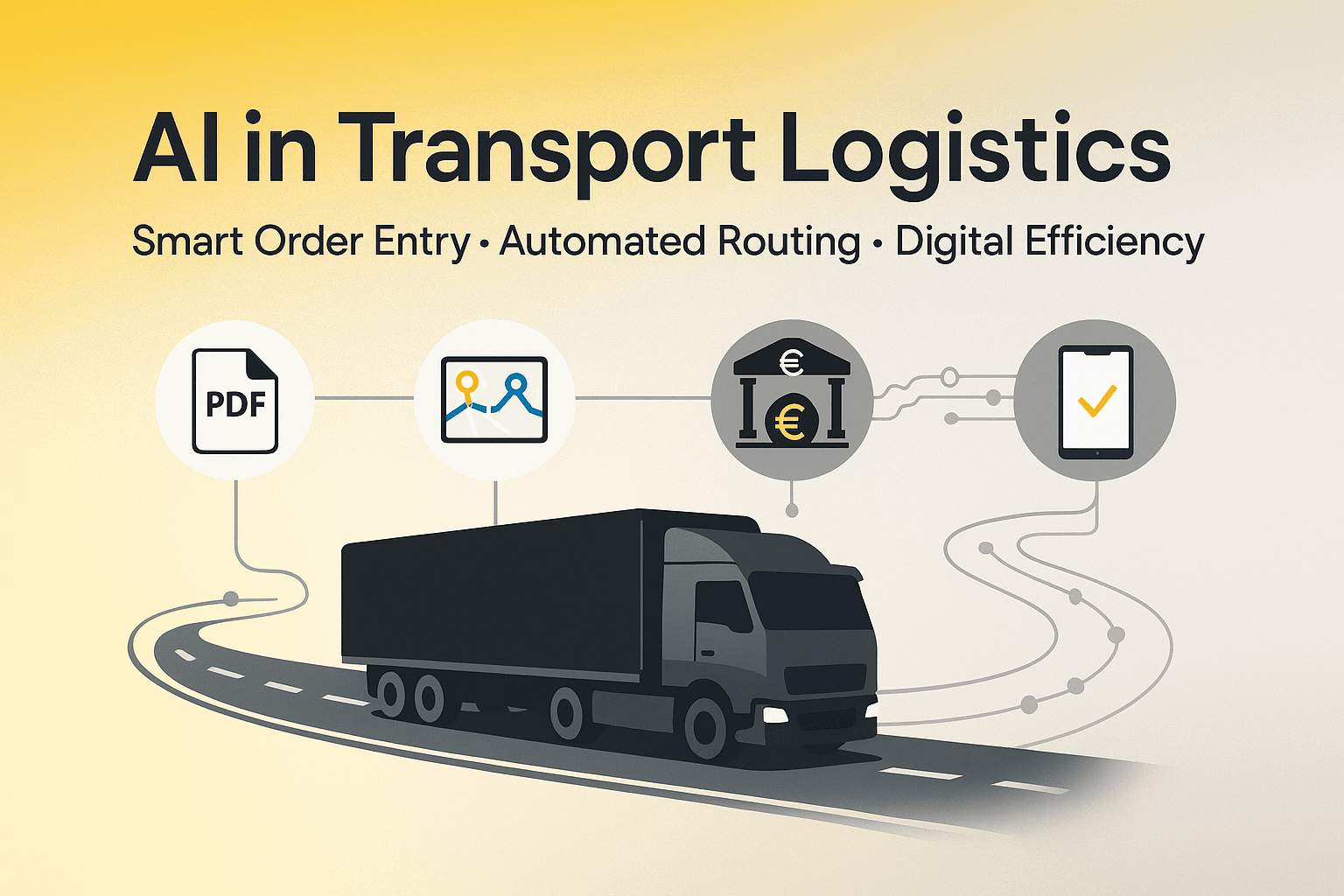
Strip away the marketing and AI in road freight comes down to a few concrete jobs: extracting data from documents, suggesting the most economical truck route, estimating cost and margin, and surfacing exceptions (a stop that will miss its time window, an order that is below your usual rate). The value is measured in dispatcher minutes saved and errors avoided, not in the label on the feature.
- Automated order capture: the system reads a PDF, email, or photo order and creates the job, instead of a dispatcher retyping it.
- Cost-aware route planning: the truck route planner weighs distance, per-country toll, and truck restrictions, not just the fastest line on a map.
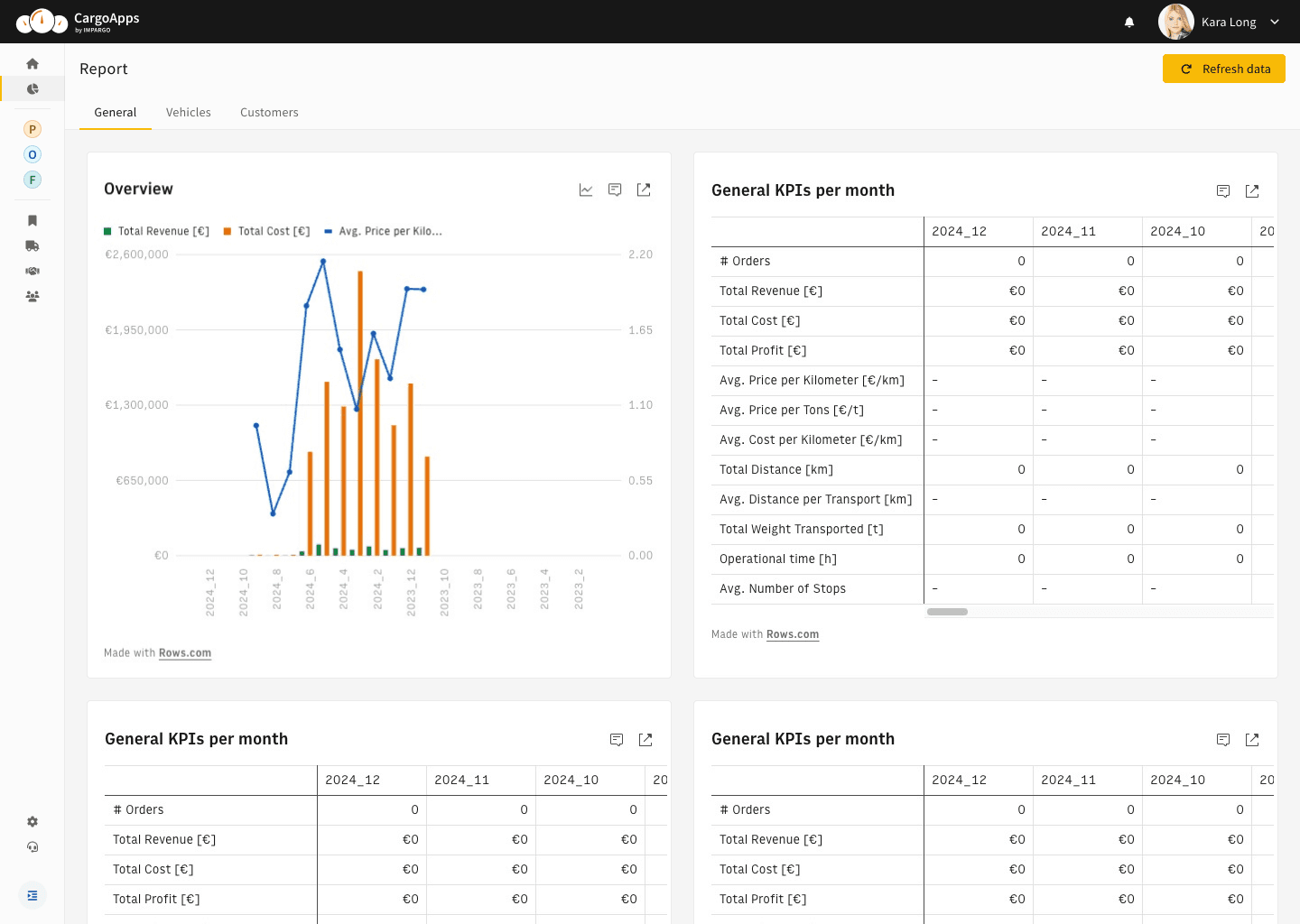
- Instant cost and margin view: the cost calculator shows what a tour actually costs before you accept it.
- Exception flagging: the system tells the dispatcher what needs a decision, rather than making the dispatcher hunt for it.
Where AI Earns Its Place in a Small-Fleet TMS
The clearest win is order entry. A typical transport order arrives as a PDF or email and gets retyped into the TMS by hand: addresses, references, goods, dates, agreed price. That is minutes per order, repeated dozens of times a day, and every retype is a chance for a typo that becomes a follow-up call. Letting the system read the order and pre-fill the job removes most of that keyboard time and frees the dispatcher for planning and customer service.
The second win is routing that knows what a truck costs. A route that looks short on a car map can be the expensive one once toll, bridge and weight restrictions, and driver hours are counted. Planning against real truck costs protects the margin on every tour.

The Modules That Do the Work
In IMPARGO, these jobs live in specific modules rather than one vague "AI" box:
- Digital order and offer management captures orders and generates documents.
- Truck route planning builds the cost-aware tour.
- Invoice automation turns the completed tour into a billed job.
- Fleet telematics and integrations put GPS, ETAs and status on one live map.
For a deeper look at the autonomous direction this is heading, see AI agents for transport and logistics.
What AI Does Not Do (And Why That Is Fine)
A TMS does not replace your dispatcher. It removes the retyping and the manual route math so the dispatcher spends the day on the judgement calls that actually need a person: which customer to prioritise, whether to accept a marginal load, how to handle a breakdown. The realistic goal for a 5-to-30-truck fleet is a "no-touch" standard load, where routine orders flow through with minimal handling and the dispatcher focuses on the exceptions, not an empty office.
How to Move From Manual to AI-Assisted
- Start with the task that hurts most, usually order entry, and automate that first.
- Plan routes against real truck costs so the margin is visible before you accept a load.
- Connect your existing telematics so tracking lives in the same system, not a separate tab.
- Keep the dispatcher in the loop on exceptions, so trust builds before you widen what runs automatically.
IMPARGO is cloud-based, so setup needs no special hardware, and it scales from a handful of trucks upward. The paid TMS modules are available on a free trial, so you can test the order-entry and routing time savings on your own orders before committing.
See What a TMS Automates in Your Operation
FAQ: AI in Logistics and Transport Management
What does AI in logistics mean?
It means using automation to handle repetitive transport-management tasks, mainly reading order documents, planning cost-aware truck routes, and calculating cost and margin, so dispatchers spend less time on data entry and manual route math.
How does it help a trucking company?
It cuts the time spent retyping orders and re-planning routes by hand, reduces data-entry errors, and makes the real cost of each tour visible before you accept it.
Does it integrate with other trucking software?
Yes. A modern TMS connects with telematics systems and other tools so tracking, orders and costs live in one place instead of separate tabs.
Can I try it before paying?
Yes. The paid TMS modules are available on a free trial, so you can test order entry and routing on your own orders first.