Tolls Outweigh Fuel Costs in Europe: What the IRU Data Means for Carriers
For decades, diesel prices were the primary headache for European logistics managers. That era is ending.
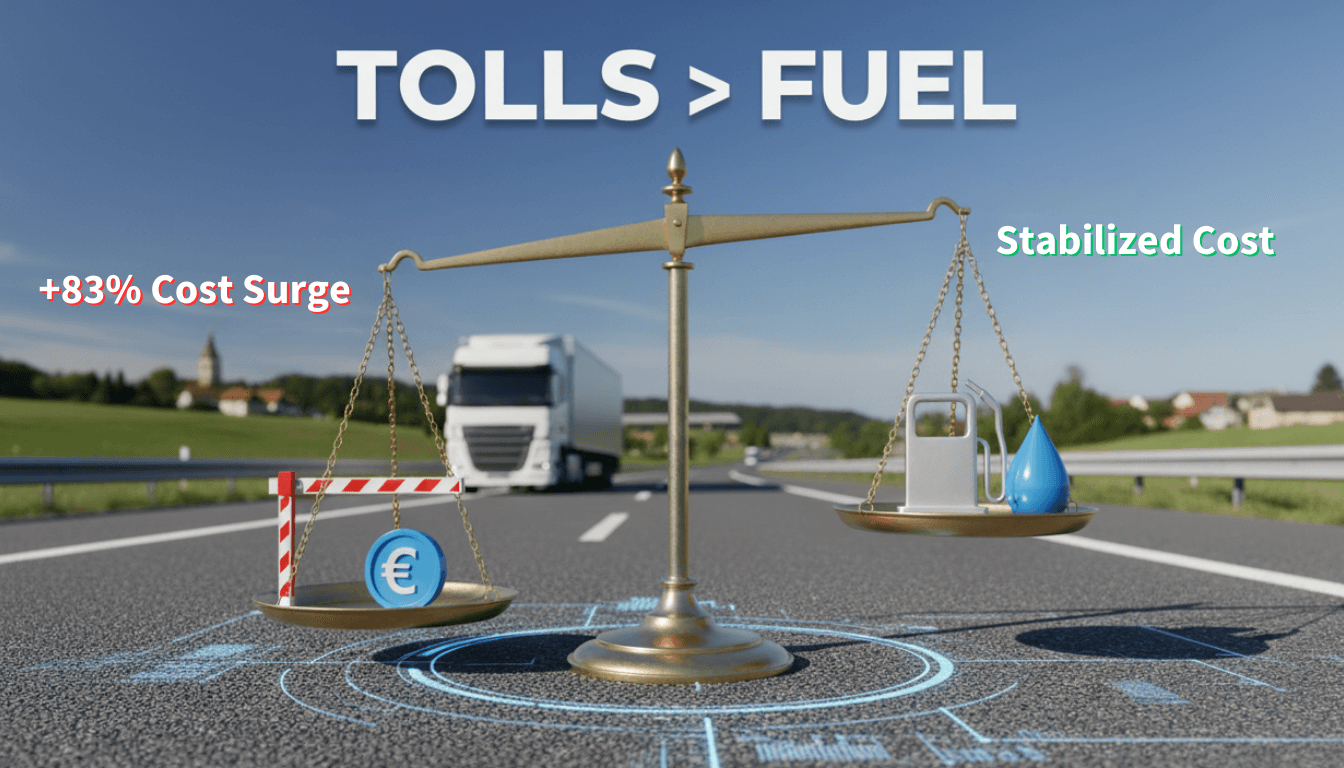
The International Road Transport Union's (IRU) latest briefing, Driving Profitability: Fuel, Tolling and Cost Trends in the EU, confirms a fundamental tipping point: tolls have overtaken fuel as the largest operational expense for heavy-goods vehicles in key parts of Europe.
⚠️ The Risk to Your Wallet:
If you are still quoting transport offers based on old "fuel-heavy" logic, you are likely underpricing your services. In Germany alone, tolls now account for up to 15% of the Total Cost of Ownership (TCO). Every euro you underestimate in tolls is a euro taken directly from your profit margin.
The Data: Where Are Tolls Higher Than Fuel?
The IRU analysis reveals that the "Toll > Fuel" reality is driven by policy — specifically the Eurovignette Directive and CO₂ surcharges. The report highlights three critical markets where the shift is undeniable:
- 🇦🇹 Austria (Transit Routes):
The gap here is wide. For a standard Euro VI articulated lorry, toll rates have climbed to €0.62 per km. In comparison, fuel costs for the same vehicle sit around €0.46 per km. - 🇩🇪 Germany (The CO₂ Shock):
Since the introduction of the CO₂ surcharge, tolls for Euro VI vehicles have increased by approximately 83%. On many major trade lanes, this surcharge alone pushes the total toll cost above the fuel burn rate. - 🇭🇺 Hungary (Older Fleets):
The shift is most dramatic for older vehicles. The heaviest Euro 0 vehicle classes now pay €1.48 per km in tolls—more than double the cost of diesel.
What's Coming Next?:
The trend is accelerating. Denmark's recent switch to a distance-based system caused a massive 500% increase in average truck tolls. Meanwhile, the Netherlands plans to implement a similar model in July 2026.
The "Hidden Cost" Trap: Are You Paying for Your Customer's Cargo?
Let's mentally simulate a scenario:
You accept a transport order through Central Europe. You estimate the fuel cost perfectly (diesel has stabilized around €1.54/liter). However, you rely on a generic "average toll" calculation from last year.
- The Reality: You hit the 500% increase in Denmark or the heavy CO₂ surcharge in Germany.
- The Result: The extra cost eats up your entire margin on that trip. You effectively moved the cargo for free.
With toll complexity rising—factoring in axle counts, weight, CO₂ class, and time of day—manual spreadsheets create Ambiguity. In logistics, ambiguity kills profitability.
Stop Guessing: Instant Clarity with IMPARGO
You don't need a degree in European tax law to protect your margins. You just need to remove the friction.
The IMPARGO Truck Route Planner removes the guesswork instantly. It transforms a complex calculation into a simple process:
- One Click: Upload your route points.
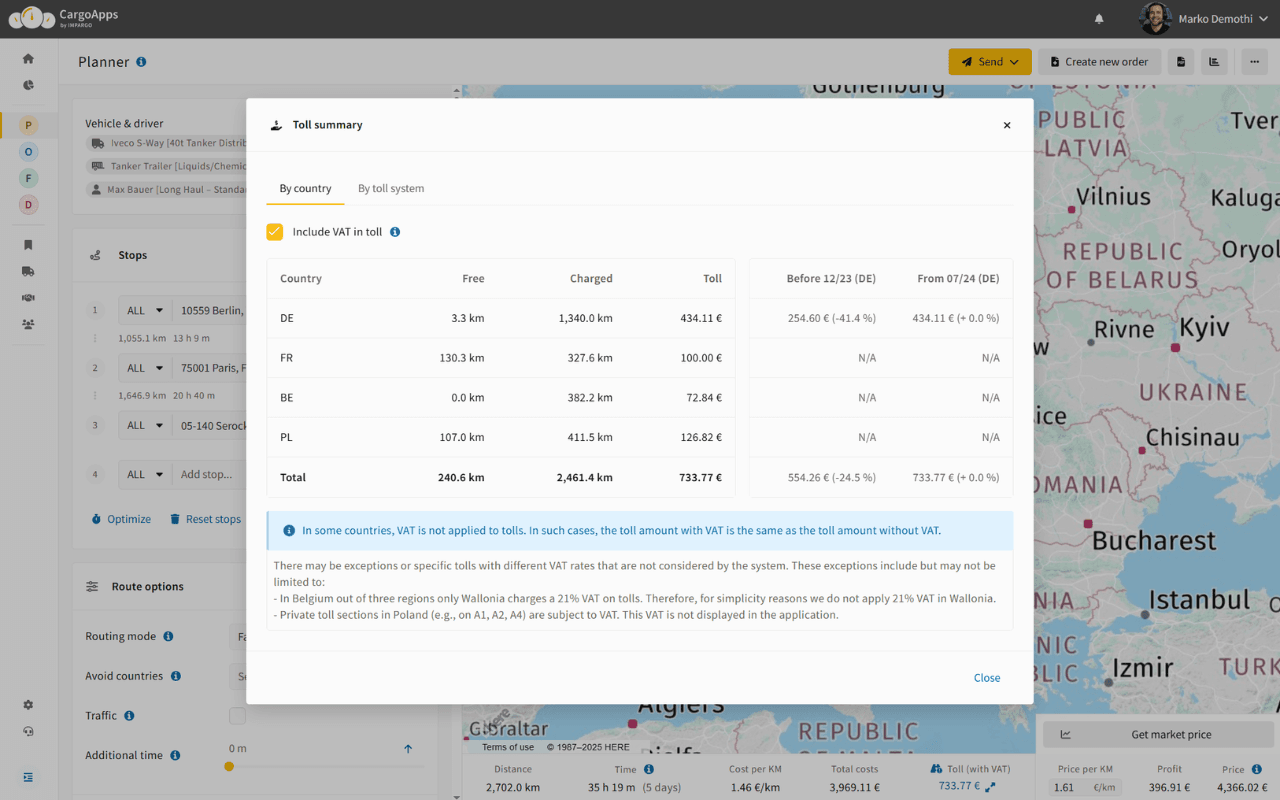
- Zero Ambiguity: The system calculates the exact toll cost for your specific vehicle (Euro VI, Electric, or even Euro 0).
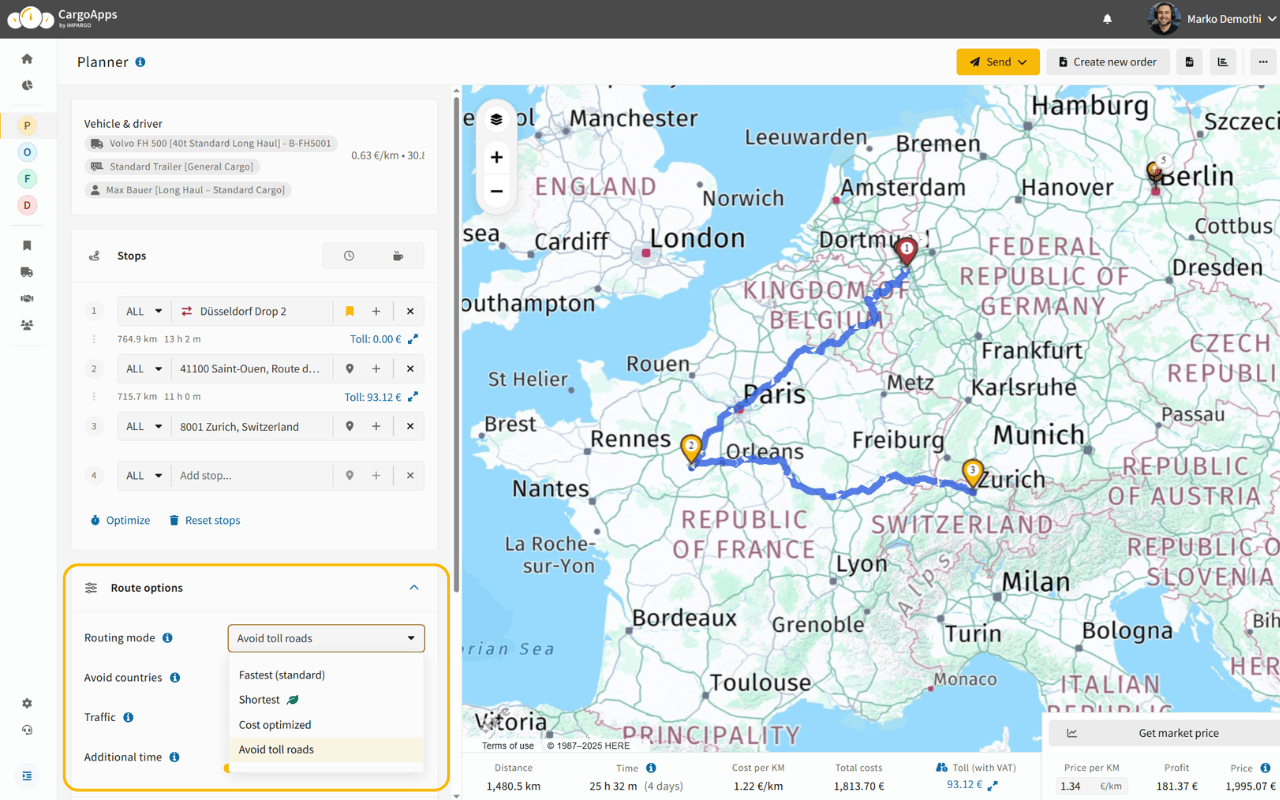
- Total Control: Compare the "Fastest Route" against the "Toll-Optimized Route" to see if a small detour saves you money.
How much is that route actually costing you?
Don't rely on estimates.
> Check the exact toll cost for free in the Planner
Why Fuel Hedging Is No Longer Enough
While toll costs skyrocket, fuel costs have largely stabilized. The IRU recorded a weighted EU average diesel price of €1.54 per litre in August 2025. However, management must recognize that "cheaper fuel" does not equal "cheaper transport."
The Management Takeaway:
Profitability no longer hinges on global oil prices, but on how effectively you navigate Europe's evolving toll landscape. A carrier with fuel-efficient trucks can still bleed cash if they are running on high-toll corridors without accurate cost forecasting.
3 Ways to Adapt Your Pricing Strategy
To survive this structural cost shift, carriers must move away from flat "per-kilometer" rates. Here is how leading logistics managers are restructuring their process using IMPARGO:
- Itemize Tolls in Your Offers:
Stop bundling fuel and tolls into a single freight rate. Use IMPARGO's Offer Management module to generate professional PDF quotes that list toll costs as a separate line item. This transparency makes it easier to pass CO₂ surcharges on to shippers. - Offer "Tiered" Routing Options:
Give your customers a choice. Use the Planner to check a "Fastest Route" (Higher Tolls) vs. a "Cost-Optimized Route" (Lower Tolls). This shifts the decision (and the cost) to the customer. - Automate Proof of Cost:
Disputes over surcharges delay payments. By connecting your planned routes directly to IMPARGO's Invoicing tool, you can ensure that the exact toll costs calculated during the quote are reflected in the final invoice, securing your cash flow.
Conclusion: Profitability Now Depends on Precision
The IRU's warning is clear: the cost hierarchy has shifted. Tolls > Fuel. In this new landscape, the carriers who win are the ones who know their costs down to the cent before they quote.
Don't let a toll change wipe out your profit.
You have two choices:
- Risk underquoting by using outdated averages.
- Anchor your prices in reality using digital tools.
Secure Your Margin Now
Try the IMPARGO Truck Route Planner (Free Version). Calculate tolls, optimize routes, and quote with confidence in seconds.
> Click here to calculate your route for free
About the Author
IMPARGO Logistics Research Team
We create the autonomous dispatcher for road freight.
IMPARGO is a Berlin-based logistics software company developing a modular Transport Management Platform (TMP®) for road freight. Our mission is to automate core logistics processes—from route planning to transport execution—and enable seamless collaboration across the supply chain. Today, more than 15,000 dispatchers in over 30 European countries use IMPARGO to reduce manual work and increase productivity.